

When talking about the Impressionism period, most people would immediately think of Van Gogh, Monet or Renoir. While I love these artists dearly, personally I feel more connected to Édouard Manet (1832 – 1883) and his artworks. While he could be considered one of the earliest adopter of the impressionist style and was very influential to other artists of his time, he is usually one of the lesser mentioned painter name for this era, probably due to his uninterest in seeing himself as a representative of the style.
However, in some ways, I feel like he is the true silent hero of the Impressionism period. Though facing numerous criticisms from the academia, instead of breaking away like other artists, he did not stop experimenting and kept trying to submit his works to the Salon. He outwardly challenged the academic doctrine and chose his battlefield to be where the conventions of middle-class art were traditionally celebrated. Manet did not care about establishing any kind of movement, all he wanted was to show the public how “reality” can be achieved through a new perspective and be the catalyst for change. The novelty in his approach towards changing the public perception, I think, is quite underrated by today’s audience.
One of the things I admired most about him, is how he daringly chose the subject matter for his paintings. He was one of the first nineteenth-century artists to approach contemporary subjects such as people in cafes, beggars, singers, drinkers, and even prostitutes. No longer accepting classical beauty and mythological figures as aesthetic ideology, Manet chose to depict real people in real life, even when that could give him a bad reputation among the public and have his works rejected repeatedly by the Salon. He did not shy away from controversy and made his stand very clear – “I paint what I see, and not what others choose to see”, giving inspiration to the younger artists who would later become dominant figures of the Impressionism.
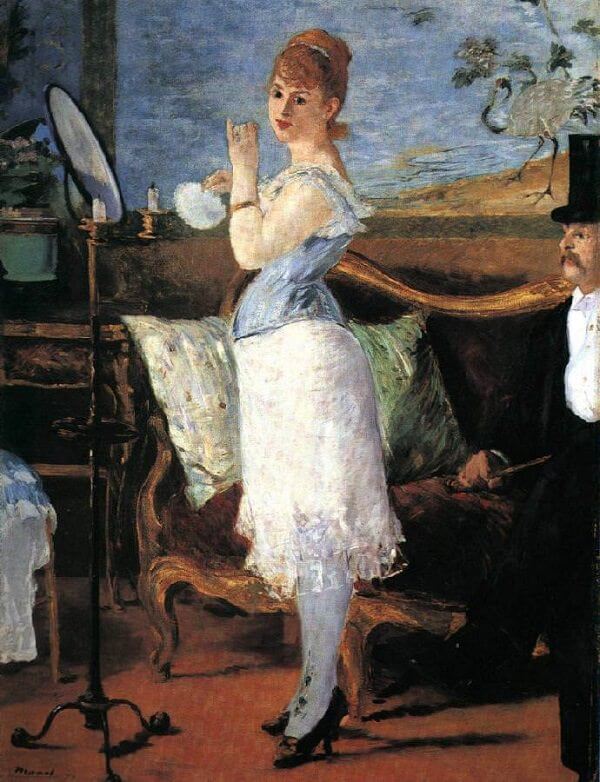
Nana (1877) 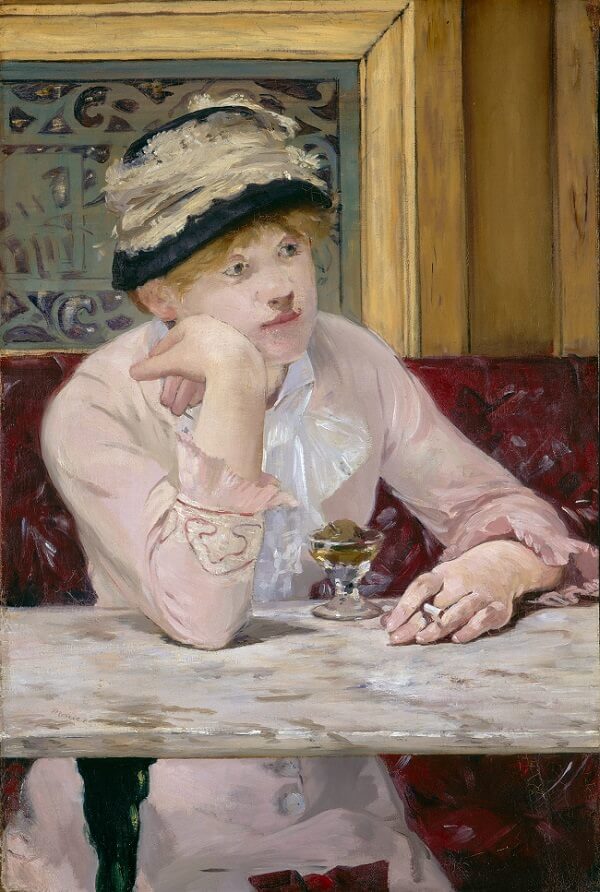
Plum Brandy (1877)
Rag Picker (1869) 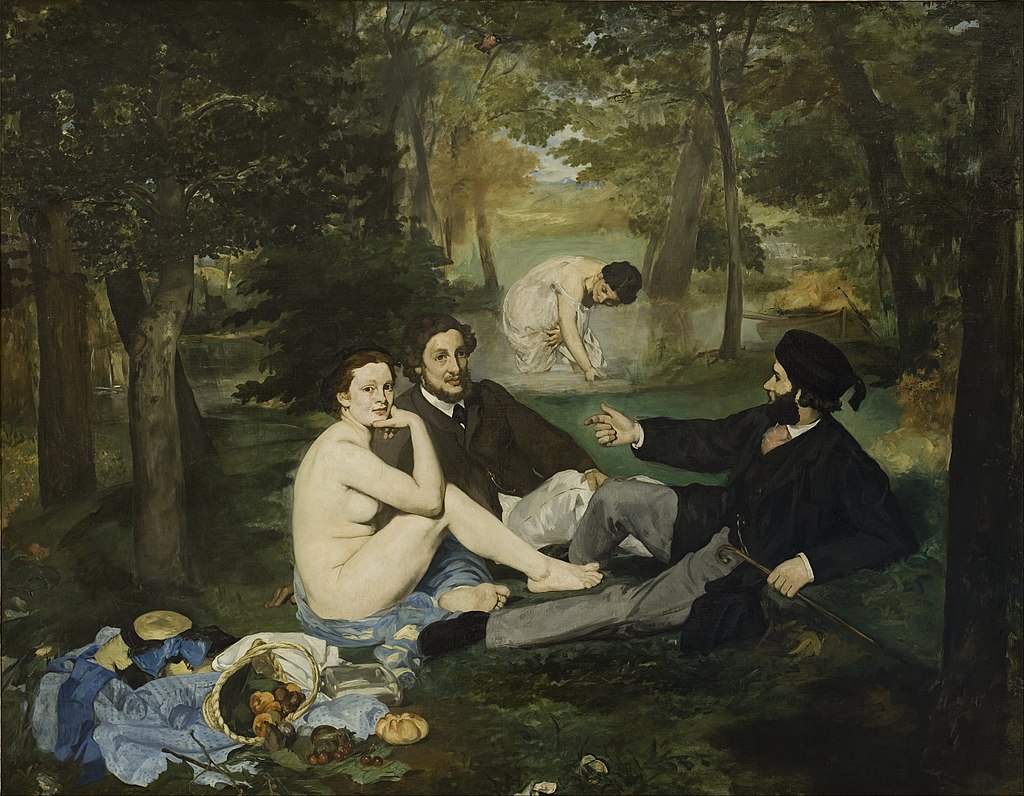
Luncheon on the Grass (1863)
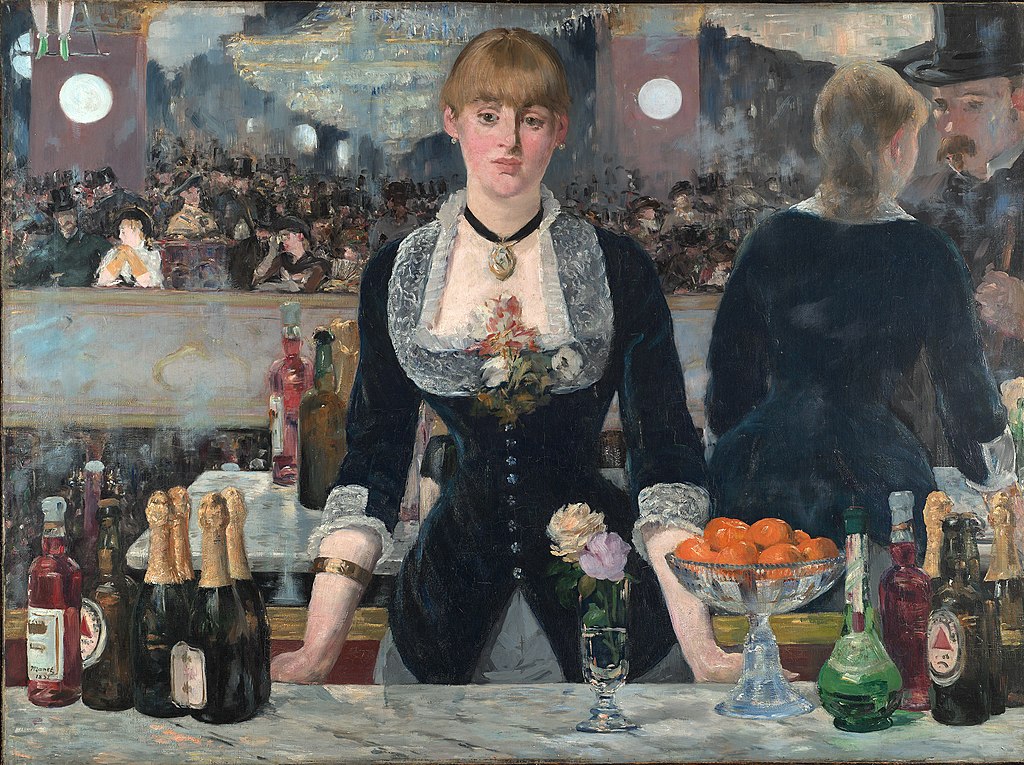
But there is something even more intriguing about Manet’s works, and that is the way he blend aesthetic with moral and socio-political values. In many of his painting – “Luncheon on the Grass”, “Nana”(1877), “Olympia”(1878), “A Bar at the Folies-Bergere”(1882), prostitution pops up as a recurring theme. A prostitute at that time was considered a “fallen” woman, and thus was not deem decent enough to be presented in art, especially art that was displayed at a prestigious place like the French Salon. However, prostitution was a thriving industry at that time. Under the Victorian Age, patriarchy is the dominant culture value, and the French legislation deemed women unfree and in need of protection, thus excluding them from legitimate job, resulting in most working-class women having to choose this profession as a way to escape poverty and unemployment. By featuring prostitution in his art, Manet not only showed the real economic setting of the time, but also raised challenging moral issues that had been generally neglected by the society.
Even more brilliant, I think what set Manet apart was his ability to adapt classic precedents and their expressive values to contemporary reality, to make the contrast of subject matter even more apparent, like in the cases of “Olympia” and “Luncheon on the Grass”. Drawing inspiration from famous paintings in the past, Manet’s artworks, however, did not show any sign of female modesty. Instead, Manet featured women giving an unabashedly defiant, confrontational gaze towards the audience, like they were questioning the roles of women within society.


While other Impressionist artists also portrayed contemporary life, in my opinion, no one could present it in such a profoundly humane way like Manet, which speak to the core of the society values. However, at the same time, he was able to maintain a level of detachment with his artistic method. There was no grand accusations, everything was just passive contemplation. “But for that very reason his pictures objectively constitute a more biting critique of society than ay socio-critical caricature could achieve” (236, Walther, Feist and Von Bismarck, 2016).
In the book Impressionism published by Taschen, there is this paragraph describing Manet that I found strikingly fascinating as that deeply resonates with me.
He became a flaneur – that new type of man about town later so profoundly analyzed by Walter Benjamin. The flaneur accepts the workings of chance. Himself moving in his own irregular way, he is the observer of a world in constant flux. He is attentive but remains uninvolved at heart. He is unprejudiced and does not leap to judgmental conclusions. (40)
Impressionism in France (Walther, Feist and Von Bismarck, 2016)
As a person who loves to travel and observe the world, I can wholeheartedly understand and share the same sentiment. One of my favorite pastime activities is sitting in a corner of a coffee shop, watching other people and the dancing light, while immersing myself in the surrounding ambience. There is always a strange sense of beauty and enlightenment in these fleeing moments, which required you to really slow down and observe to recognize and comprehend.
And I guess that is why I am particularly drawn to Manet, as he was able to capture these moments perfectly. Using loose brushstrokes and alla-prima (wet-on-wet) painting technique, Manet played with the idea of capturing the present, recording the breath of life as fast as possible. Also, he disregarded careful composition of subject matter as taught by the academic, and adopted unusual viewpoints to show exactly what he witnessed in the moment. But more than that, he was among the first artists of the period to reject the old belief of treating painting merely as a mirror. Instead, he stressed the act of painting and the artist’s perspective as a reality that should be acknowledged, paving the way to later artists such as Van Gogh, Gauguin to further capitalize on this new concept. By suppressing transient shades between different blocks of color, he drew people’s attention to the picture plane and the material of paint, implicitly stating that what they see is first and foremost a painting, which should be treated as a creative expression of the artists.
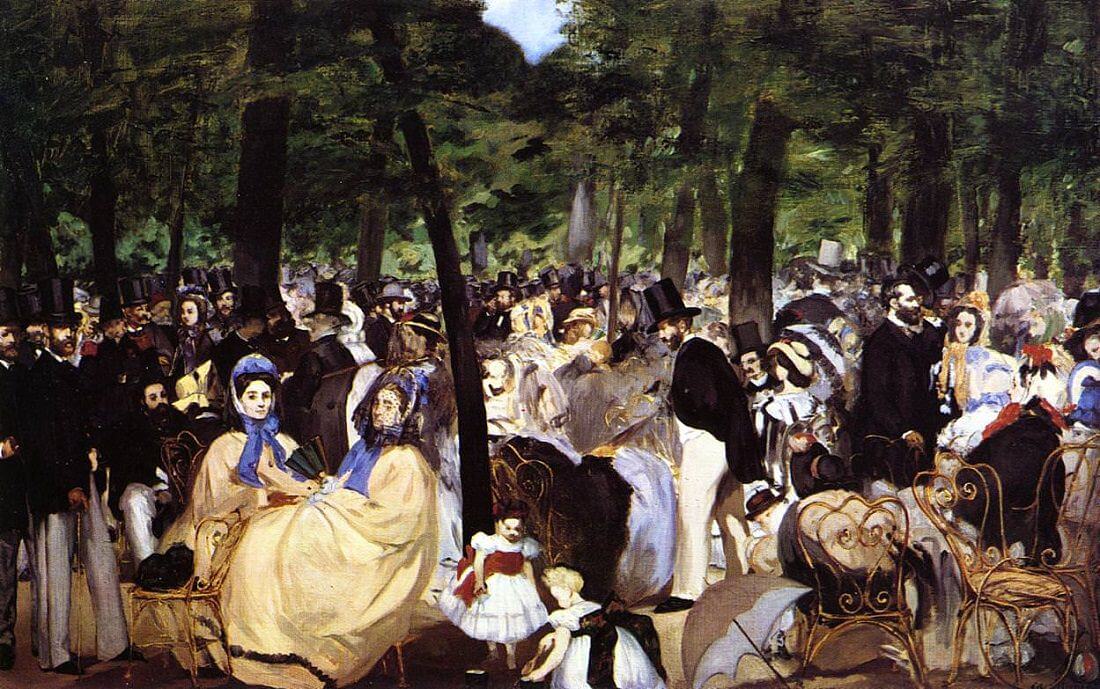

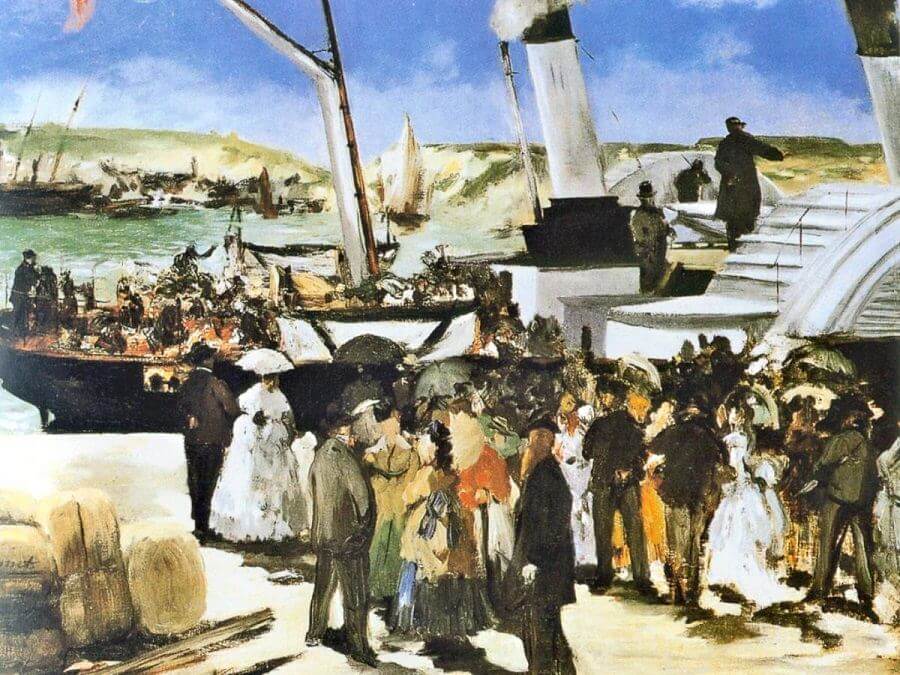
While certain aspects of Manet’s works may not fit the narrowly conceived definition of the Impressionism, mostly regarding his choice of subject matter and color palette, it is undeniable that he was a major driving force behind this movement and led the way for the younger Impressionists to approach reality with its full complexity.
Reference:
Walther, I., Feist, P. and Von Bismarck, B., 2016. Impressionism, 1860-1920. Koln: Taschen.
 A Dream Wanderer
“However, in some ways, I feel like he is the true silent hero of the Impressionism period…” You could be right ! I always think of him and his unconventional themes, poses as creating the modern, somehow libertin image of Paris as the city of the beautiful ladies and “La Vie en rose”….
“Hold me close and hold me fast
The magic spell you cast
This is la vie en rose
When you kiss me heaven sighs
And though I close my eyes
I see la vie en rose…”