To celebrate new year, I want to reblog an article that serves as a good reminder for myself. I know that I am competent in many things, and I have some achievements in my life, but at the same time, my internal problem is that I keep thinking of my failures rather than my achievements. I look at my friends and admire/envy their successes. I live in an environment where there are so many talented people surrounding me, and that drives me to think of how worthless I am. So for next year, I hope I can start believing more in myself, and stop this pointless habit of devaluing myself. If you have a problem like mine, you should read this following article.
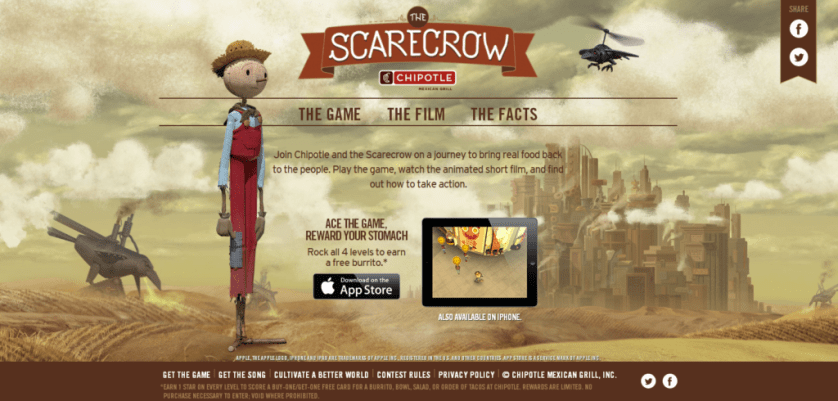
My thoughts about 2 amazing ads of Chipotle -“Back to the start” and “The Scarecrow”
Đã dự tính viết một bài về ads của Chipotle từ mấy tháng trước rồi nhưng bây giờ mới thảnh thơi đầu óc để góp đôi dòng cho hai đoạn quảng cáo hoành tráng gây xôn xao dư luận này.
Cho những ai không biết Chipotle: Đây là một thương hiệu thức ăn nhanh cao cấp của Mĩ chuyên bán bánh kẹp Mexico (burittos và tacos). Chipotle được thành lập năm 1993 với mục tiêu cung cấp thực phẩm được nuôi trồng bền vững và có đạo đức. Nói cách khác, Chipotle hướng tới việc sử dụng thực phẩm không dùng các loại thuốc biến đổi gen (GMO) và xuất sứ từ nguồn súc vật được nuôi dưỡng trong môi trường tự nhiên và không bị ngược đãi. Đọc tiếp “[Thoughts] Chipotle’s Ads”
Phew…. So finally this challenging term has ended. Looking back, I am glad that I chose New Product Development and Integrated Marketing Communications this term. Tim Silk and Ann Stone are definitely my two most favourite professors ever, as they have a lot of knowledge and experience to share with the class.
Two years in Marketing option exposed me to a lot of teamwork and projects. I think by now I have dealt with all kinds of people with different work ethics. I have worked with those slackers who gave a shit about group work and somehow still managed to look like the world owe them something. Thanks God I don’t have any of those people in my group this term or else my term would be in hell. But last year I was inexperienced and put up with that attitude; if that happens again, I won’t tolerate any more. On the other hand, I have also worked with a few people who were super responsible and super brilliant. Too bad, good things rarely last long, and I have come to accept the fact that I can never be in the same team with them again. This year, I am grateful that the members in my group are responsible and dedicated, although not to the extent that I wish they could be. I am sure that the projects I worked on this term would be much better if my group mates were willing to pay extra effort. Working in a group can be really challenging if your team members do not share the same goal with you. Sometimes, your good ideas might be scrapped just because the rest of your team do not want to go beyond the acceptable level. I am still pretty mad that all the concerns I raised are not acknowledged by my group, but are exactly what the professors point out later. If only my group were willing to work harder, the result could be much better. I do not want to be too pushy or demanding, but sometimes it’s hard to see that what I care about does not match my standard and expectation. That doesn’t mean I am right in everything, but there are valid points that my group refuse to work on just because the deadline is close and they do not want to change. So after I see my prof’s comments, which spot on what I told my group before, I just want to yell “In your face, people”. Anyway, it’s all over and everyone has a life, so I won’t delve on it further.
Despite some bad experience with group work, I really enjoy the two courses I took. For New Product Development course, I learned the discipline to create a completely new product, from generating idea to optimizing product design. So basically, my group had to do unobtrusive observations, concept engineering questions, structured brainstorming to generate ideas. After that, we did another interview round to decide which consumer needs we need to optimize for the product. It’s unfortunate that we could not do final concept testing due to the short length of the course. The thing I appreciate the most about this course is that it destroys the illusion students usually have about first mover advantage, as well as to teach us how to think critically about barriers to adoption and trade-off when designing the product. Great product idea does not come out of thin air, but should always be based on consumer needs. I don’t really like the industry my group decides to work in, but I am pretty content with the final product idea. I also learn a lot from other groups, and it amazes me of how bright my classmates are.
Integrated Marketing Communications is awesome, and that is why I even made a separate post for it. The term kicked off with a positioning assignment, then following by a Coca Cola creative brief. Playing the client side and presenting to creative team was pretty difficult because you must engage creative people to work on your assignment. Also, writing a creative brief teaches me that it is actually quite hard to give an assignment that is specific enough but still gives enough space for the creative team to get their awesome juice flow. Some teams are so great at presenting, and I’m just in awe with so many great public speakers in my class. If only they could share a little bit of their charismatic with me. The last project is to give a pitch to a public utility corporation in the province, which can be considered as a client. The experience I went through for the last project is pretty interesting.The client gave us their problem, and we had to plan a campaign for them, together with making creative pieces. The project is particularly challenging because there is no product to sell, no tangible benefit, so we don’t sell a product, we are selling an idea. My group planned a campaign called “Be Green, Not Extreme”. In terms of creativity, we had to write a script for TV commercial, draw storyboard, create a multi-functional postcard, and design the layout for a website. While my group’s pitch did not score well enough in terms of clarity (we explain much better in the report), the visuals were praised by my prof, who is a strict marker, so I am really happy about that. Too bad my group’s pitch is not the best in the class, but after all, what’s important is the lesson.
I am so happy that I’m done with the first term. For my short holidays, I just want to lay on bed and read/watch the things I missed during the term, like Mad Men. I went to see The Hobbit 2 yesterday, and man, it’s so great, even better than what I imagined when I read the book. Next week I’m going to see Catching Fire, heard it’s a good movie too. Sometimes I wish I could work in the movie production industry, it would be so much fun.
I recently visited IKEA website for shopping purposes and accidentally came across this page http://www.ikea.com/ms/en_GB/rooms_ideas/small_spaces/index.html, which features an interactive virtual 3600 tour within a small flat, together with many tips on how to use small spaces efficiently, and a TV commercial aired in the UK. I soon learned that this webpage is dedicated to an IKEA’s UK campaign called “Make Small Spaces Big”, which is part of a world-wide integrated marketing campaign centralizing on “Small Space Living”. I think this is a very clever campaign, and the execution of the TV commercial called “One Room Paradise” in the style of a music video is brilliant.
The first aspect I want to comment onis IKEA’s current market situation, which I think is the rationale behind the campaign and probably included in the creative brief. While IKEA’s market share has increased in the UK, its penetration has not, and consumers start associating IKEA with “low prices” only, rather than “nice furniture at low prices”. In addition to that, due to the current economic reality, the new mindset among consumers is valuing less disposable goods and wanting to own fewer goods. Hence, I think that previous marketing campaigns of IKEA thatencouraged consumers not to feel committed to their furniture has probably become less relevant and compelling in today’s marketplace. In order to keep growing, IKEA cannot sell more goods to the same customer base using its “low prices” value proposition, but must gain more penetration and engage its customers with other emotional appeals. More importantly, IKEA must make consumers associate the brand with other values rather than itscheapness. Also, like other international brands, IKEA has to adapt its identity to local values, so that the brand can stay culturally relevant.
It is quite obvious that IKEA is going through a rebranding process in the UK, which is reflected in the stark contrast between IKEA’s tone of voice in early ads and that in recent ads. In earlier campaigns, IKEA told British consumersto discard their old furniture and be less English in a dogmatic manner (some of IKEA’s taglines were “Chuck out your Chintz” and “Stop being so English”). Although IKEA’s clever ads with commanding statements may work in favour ofthe brand inthe beginning, naturally people do not want to be bossed around; therefore, such approach may not work well in long term. However, since 2010 IKEA’s campaigns have become more family-oriented and understanding, and less about the product itself but more about how people’s relationship can be enhanced with the use of such product. Some examples are the “Living Together” and “Playin’ with My Friends” commercials. These commercials all demonstrate how IKEA can help people organize their lives better and foster a happy atmosphere at home. With such changes, IKEA is probably trying to reposition itself to be an expert in enhancing the quality of people’s relationships through home furnishing solutions.
Regarding consistency, the new campaign “Make small spaces big”, launched in 2013, is consistent with recent campaigns in terms of emotional appeal because the commercial of this campaign draws on a very happy relationship between a single mom and her son. This campaign is also consistent in terms of establishing IKEA’s expert image as the commercial shows how the small flat is smartly organized. The new campaign seems to be a continuation of previous campaigns with a heavier focus on increasing the brand’s penetration and strengthening its new position.
Traditionally IKEA’s core target market is defined as young professional adults who are educated and married, have a modest income and 0 – 2 children, and care about fashion but want to live on a budget. These people value low priced products and have the tendency to move, which make them the ideal market for IKEA. However, for this campaign specifically, the primary target audience is probably single moms in the UK. They form a large market because a quarter of the children in the UK are living with only one parent, and single-parent household is most likely led by a female and is a growing social trend in the UK. Also, most single-parent families rent house, which explains the small living area and the needs for smart furnishing solutions. In the commercial, the single mom is characterized to be very independent, considerate, and caring for her son. I believe that these qualities can resonate well with most single moms in the UK, inspire them, and invite them to think about furnishing solutions that can make their lives more fulfilling. In addition to that, IKEA can also appeal to a larger target audience – people who want to live more comfortably in small homes. They are probably secondary target audience for this campaign. This initiative is based on the insight that homes in Britain are 15% smaller than those in other Western European countries, with newly-built houses in the UK decreasing in size by as much as 11% over the past ten years. Since small house is the norm in the UK, IKEA can become more relevant not only to its target consumers but also to a larger population who face the same situation. In terms of cultural relevance, I think IKEA did an excellent job with this ad.
IKEA has also made an effort to encourage consumer participation in this campaign through an interactive banner on a microsite. Upon clicking the “Start” button, users can watch a video footage with a personablehost showing them around a small flat, highlighting how the family has made the best use of their limited living space. Users can control the process by choosing the section of the house they want to watch, and clicking on any item in the house to see relevant product suggestions in IKEA store and design tips. I think that is a smart and creative way to drive sales because when people are interested in something and click on it, if IKEA can offer the right product at that moment, people can make their purchase decision faster and would be less affected by negative environmental factors. Also, by showing IKEA products in this way, consumers would not feel bored scanning through the goods on the website. IKEA website also provides space-saving solutions for different living purposes, which makes the site highly engaging with rich content. The brand also has a Twitter account for “Mandy” – the doll character in the commercial – so that her fans can actually follow and chat with her. Although I think this is a witty way for the brand to connect with its customers, unfortunately the Twitter account for Mandy is not promoted anywhere on IKEA’s website, which results in a lack of interaction.
In terms of the creative idea, I like how they use doll house to convey the idea of small places. The doll house is probably something most women adored when they were children, and by reminding the target audience of childhood memories, the commercial creates a fun, light-hearted and warm atmosphere, which is consistent with the feeling in some of IKEA’s previous commercials such as “Happy Inside” or “Living Together.” I also like that the characters in the commercial are filmed as dolls and not human because that creates a sense of wackiness, which is what IKEA is known for. I think IKEA has maintained and nailed the tone of voice for this campaign.
I am taking an integrated marketing communications class at UBC, and OMG, this class just rocks my world. Credit is given to my awesome professor, Ann Stone, who is such an amazing speaker, experienced professional, and energetic person. She is one of the best profs I have ever had, and she truly cares about students. I just admire her so much and wish one day I could be like her. The class atmosphere is usually very fun and exciting. My classmates are from all around the world and they are super smart. It’s such a joy to study in that environment.
I plan to keep this post like a diary in which I will keep updating new things I learn in class. There are some gems I don’t want to forget, and I’d like to share it with other people too.
1. So, first thing first, this is something I saw in class two days ago.
After watching it, I was astonished by the amount of work put into an ad, even just a simple food ad. They literally have to make everything from scratch and adjust tinny little pieces. And then my prof gave us her experience about peanut butter. Apparently, if you need to do photo shoot of fried chicken (like KFC), you should always bring two bags of different peanut butter brands. That’s the best glue you can find when the crust falls apart. LOL BRILLIANT IDEA. The point is, you will learn these things when you are involved enough and seriously love the brand you are working with. I think that’s a key takeaway.
2. Always have a script for every situation. Never underestimate the power of you taking control. Be bold. Be different. Be impressive. Pretending to be taxi driver and offering your dream employer a free drive to airport just to steal that person’s 30 minutes may land yourself a job offer, provided that you’re good enough.
3. Creative Brief. Never assign work without a proper creative brief. Don’t piss off the creative team. Usually companies tend to think that because they’re on client side, they can treat the agency however they want. That’s really mean and unprofessional. I am glad that I have learned how to make creative brief in this class so that I can do it the right way in future, assuming that I have the chance to do so.
4. Employers scan key words. Some employers hire talented people from other businesses they working with. So if you really want to work for company A, find a job in company B, which is company A’s partner, then hope that you get noticed by company A.
5. Creative is making the familiarity different and making the difference familiar. – Luke Sullivan
6. Finding your customers. Sometimes it’s hard to persuade your boss that the company’s customers do not behave in certain ways the boss expect them to behave. Arranging a real life test might help. My prof’s example is to set up two tables with different items so that the customers can walk through and choose whatever they like. That process can help discover the deeper psychology and lifestyle of your customers. Embrace personification. You need to humanize your brand.
8. “I’ve got a question for you. What does this city know about luxury, huh? What does a town that’s been to hell and back know about the finer things in life? Well, I’l tell you: more than most. You see, it’s the hottest fires that make the hardest steel. Add hard work and conviction, and the know how that runs generations deep in every one of us. That’s who we are. That’s our story. Now it’s probably not the one you’ve been reading in the papers. The one being written by folks who have never even been here. Don’t know what we’re capable of. Because when it comes to luxury, it’s as much about where it’s from as who it’s for. Now we’re from America – but this isn’t New York City, or the Windy City, or Sin City, and we’re certainly no one’s Emerald City. This is the motor city – and this is what we do.”
Watch this ad. Simply stunning and thrilling. The script, the sound, the motion picture, Eminem – everything is perfect.
9. Marketing is not just about creativity. Marketing involves a lot of quantitative aspects, and that is why I love it so much. For anyone who want to pursue this path, be good at Excel. To avoid having loss, you need to take your time to make a spreadsheet for every receipt you got.
Đã bao giờ bạn tưởng tượng cuộc sống mình sẽ ra sao khi câu chữ biến mất và sách vở không còn tồn tại chưa? Đó là cảm giác gì, trống rỗng, lạc lõng, cô độc?
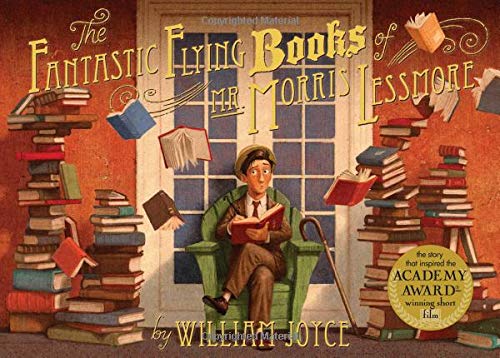
Tôi chưa hề nghĩ đến điều đó, mãi cho đến khi tôi xem đoạn phim ngắn “The fantastic flying books of Mr.Morris Lessmore” của William Joyce. Những cảm xúc mà nó mang lại trong tôi dồn dập tựa như những đợt sóng mạnh mẽ ập đến. Chỉ trong vỏn vẹn 15 phút ngắn ngủi, “Những quyển sách bay kì diệu của ông Morris Lessmore” đã truyền tải đến người xem một câu chuyện đầy xúc động về sức mạnh chữa lành kì diệu của sách.Nó khiến tôi đau đến rơi nước mắt, cũng khiến tôi chìm trong hạnh phúc bồng bềnh.
“Morris Lessmore loved words. He loved stories. He loved books. But every story has its upsets.” – William Joyce
Bộ phim mở đầu với cảnh một cơn bão dữ dội quét ngang thành phố và tàn phá tất cả mọi thứ, cuốn bay sách, cuốn bay chữ viết. Dù Morris Lessmore có cố gắng đuổi theo bảo vệ quyển sách ông đang viết bằng cách nào đi nữa thì cũng vô dụng, khi cơn bão kết thúc, cuốn sách của ông cũng chỉ còn là những tờ giấy trắng. Tôi thiết nghĩ, đó cũng chính là hình ảnh ẩn dụ cho những khó khăn giông tố trong cuộc đời chúng ta, nhất là khi bộ phim lấy cảm hứng từ chính cơn bão Katrina đổ bộ qua Mĩ. Nếu chuyện tương tự như vậy xảy ra với chúng ta, liệu chúng ta sẽ thế nào? Có lẽ chúng ta cũng sẽ như Morris, như những người ở thị trấn đó, chúng ta sẽ tuyệt vọng, lang thang, vô định, và xám xịt. Để rồi, tại một vùng đất mới, chúng ta lại được cứu rỗi nhờ sách. Được dẫn lối bởi những quyển sách bay – những quyển sách có hồn có chữ – Morris một lần nữa tìm được màu sắc cuộc sống và cảm hứng đặt bút. Và rồi ông trở thành người quản thủ thư viện kế nhiệm, tiếp tục đem màu nhiệm của sách đến cùng những người khác.
Trong phim có một cảnh tôi thấy rất tâm đắc. Đó là khi Morris Lessmore cố gắng cứu mạng sống của một cuốn sách. Cuốn sách ấy đã cũ lắm rồi, bìa sách sần sùi, gáy cũng long ra, và những trang sách thì bay tán loạn. Chắc hẳn đã lâu lắm rồi không ai ngó ngàng đến nó. Vậy nên, khi Morris đã dán lại quyển sách hoàn chỉnh thì nó vẫn nằm đó bất động. Chỉ khi ông dò từng câu từng chữ để đọc thì nó mới thực sự hồi sinh. Quả là một bài học hay được lồng kết khéo léo: sách không người đọc thì cũng chỉ là quyển sách chết. Sách sẽ không bay được nếu điều kì diệu trong nó không được ai thưởng thức.
Phim kết thúc đẹp và dịu dàng đến mức tôi bật khóc. Xuân qua, hè sang, thu tàn, đông đến, cuộc sống của Morris cứ thế trải qua cùng sách và thư viện, cho đến khi ông già đi và đặt dấu chấm hết cho quyển sách của chính mình. Để rồi, như trước kia khi ông được dẫn lối tới thư viện bởi Humpty Dumpty, sách của ông lại đưa một cô bé khác tới thư viện mầu nhiệm này. Dù Morris ra đi, nhưng những câu chuyện mà ông săn sóc giữ gìn sẽ tiếp tục sống mãi cùng thời gian.
Tôi luôn thích phim ngắn vì sự cô đọng hàm súc của chúng, mà phim này lại càng thêm xuất sắc. Cốt truyện của phim tuy thực đơn giản nhưng nó lại giàu giá trị ẩn dụ, liên tưởng, và quan trọng hơn cả là chạm đến tâm khảm của người xem. Morris chính là đại diện cho những người yêu quý sách, và những người đó sẽ luôn tìm được đồng cảm với bộ phim này. Tuy nhiên, ngoài giá trị nội dung ra, bộ phim này cũng không hề kém cạnh về mặt hình thức. Từng thước phim ra đời là kết quả của sự vận dụng khéo léo công nghệ 3D hiện đại, 2D truyền thống, dựng mô hình, và lựa chọn âm nhạc phù hợp. Năm 2012, bộ phim thắng giải Oscar cho phim họat họa cũng như một số giải khác. Tôi nghĩ điều đó đủ để minh chứng cho chất lượng nghệ thuật tuyệt vời của bộ phim này.
Nếu bạn là một người yêu đọc sách thì đây chắc chắn là đoạn phim ngắn không thể bỏ qua. Hãy xem để cảm nghiệm và hồi tưởng tình yêu tinh khôi khi lần đầu bạn chạm vào sách và để nó biến đổi cuộc đời mình.

 Đã dự tính viết một bài về ads của Chipotle từ mấy tháng trước rồi nhưng bây giờ mới thảnh thơi đầu óc để góp đôi dòng cho hai đoạn quảng cáo hoành tráng gây xôn xao dư luận này.
 A Dream Wanderer